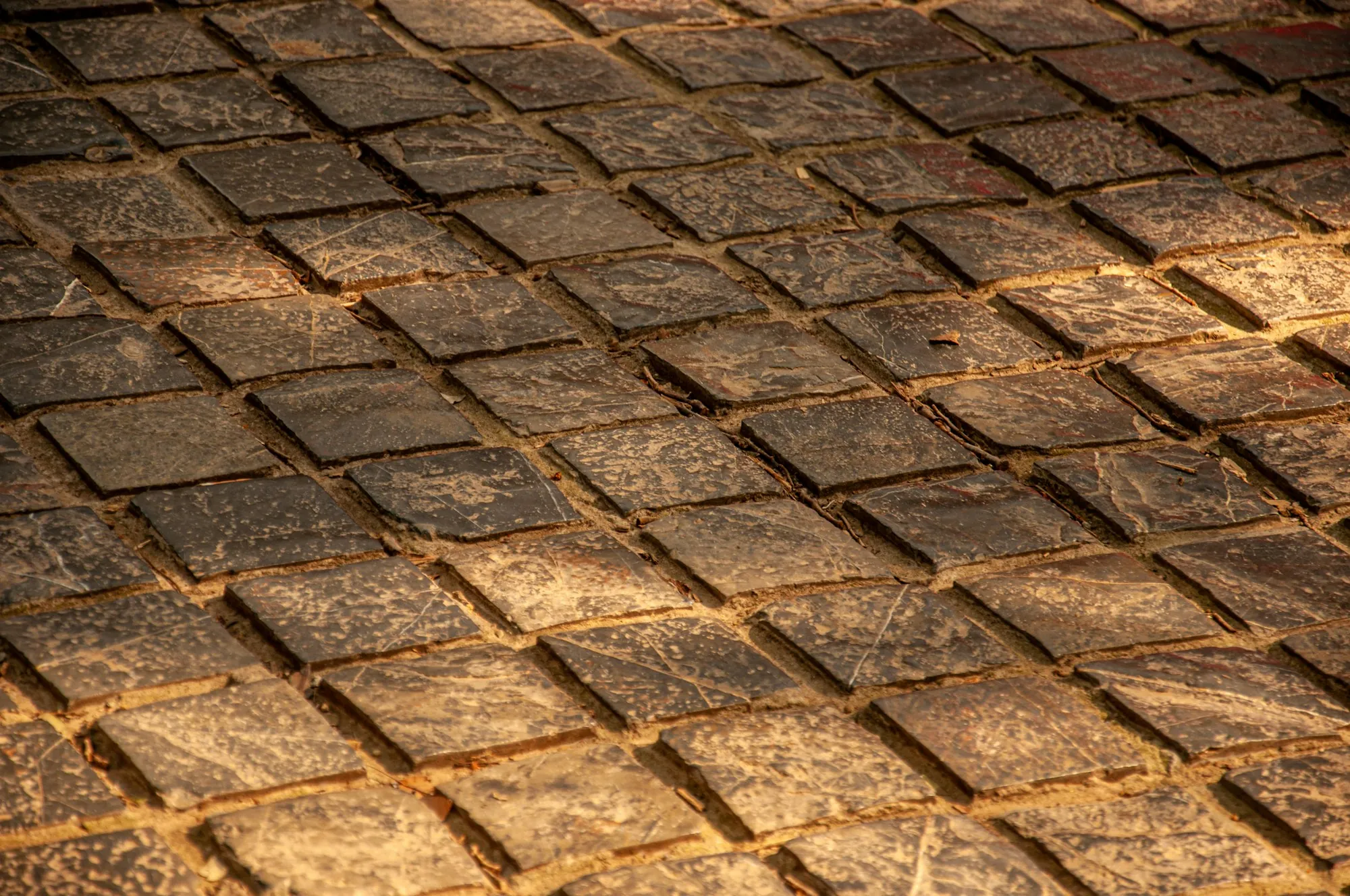
Ask anyone on our crew which job they look forward to, and most of them will say a big stamped patio. There is real craft in it. It starts the same way as any solid slab, with soft soil dug out, crushed stone packed in layers, forms staked with a gentle fall and steel where it is needed, because a stamped surface on a weak base cracks just as fast as a plain one. Then the artistry begins. The concrete is tinted, either in the truck or with a color hardener worked into the surface, to give the main shade of the stone. A contrasting release powder is broadcast across it, which keeps the mats from sticking and leaves deeper tones in the grooves the way mortar lines and weathering darken real flagstone. The crew then lays the stamping mats in sequence from a chalk line, tamping each one at just the right moment, because too early slumps the edges and too late leaves a shallow texture. Corners and borders are finished with hand tools. After a few days of curing, a pressure rinse lifts the leftover powder and a roller lays down sealer that richens every shade and makes rain bead. Slate, fieldstone, cobble, ashlar and wood plank are all on the table for patios, front walks and driveway borders around Summit.